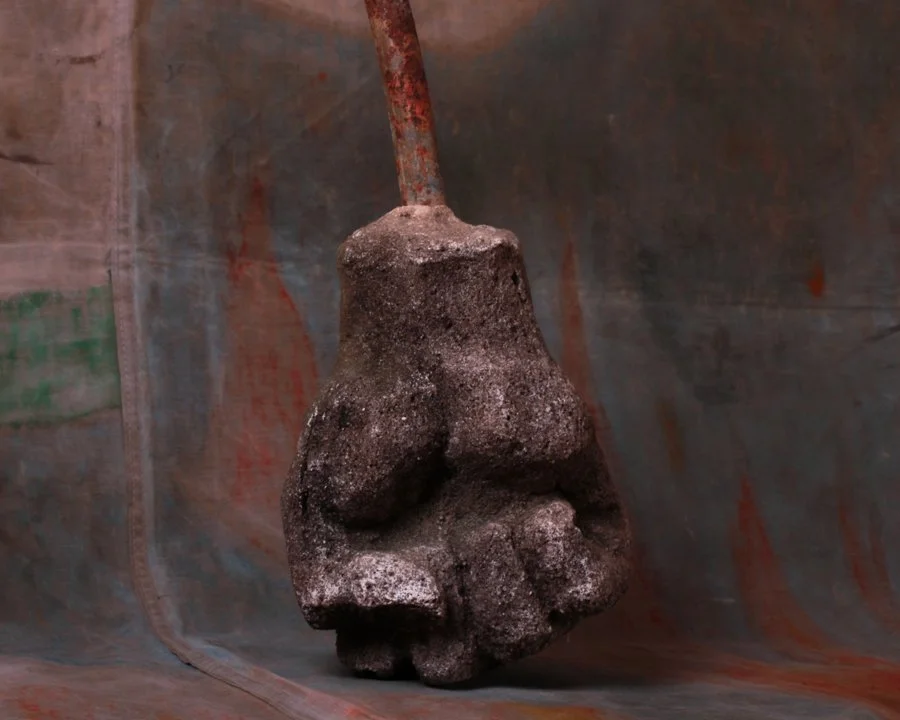
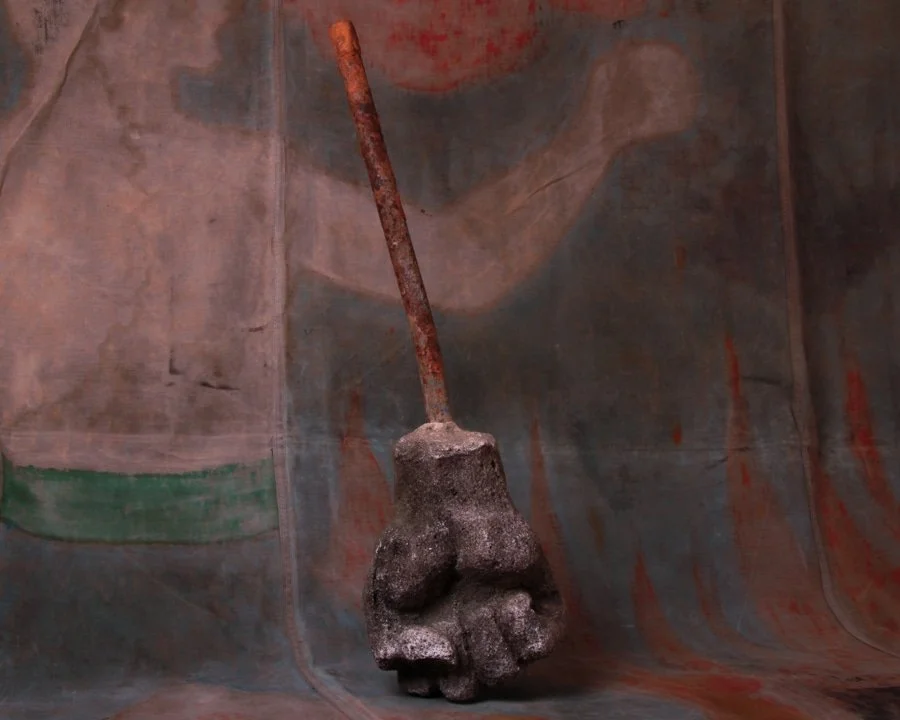
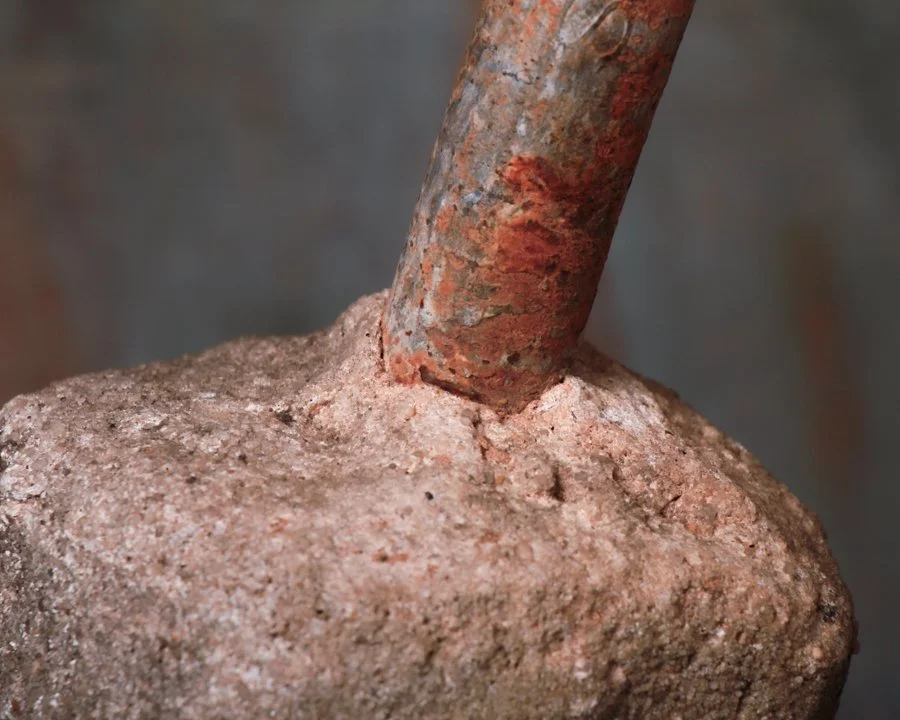
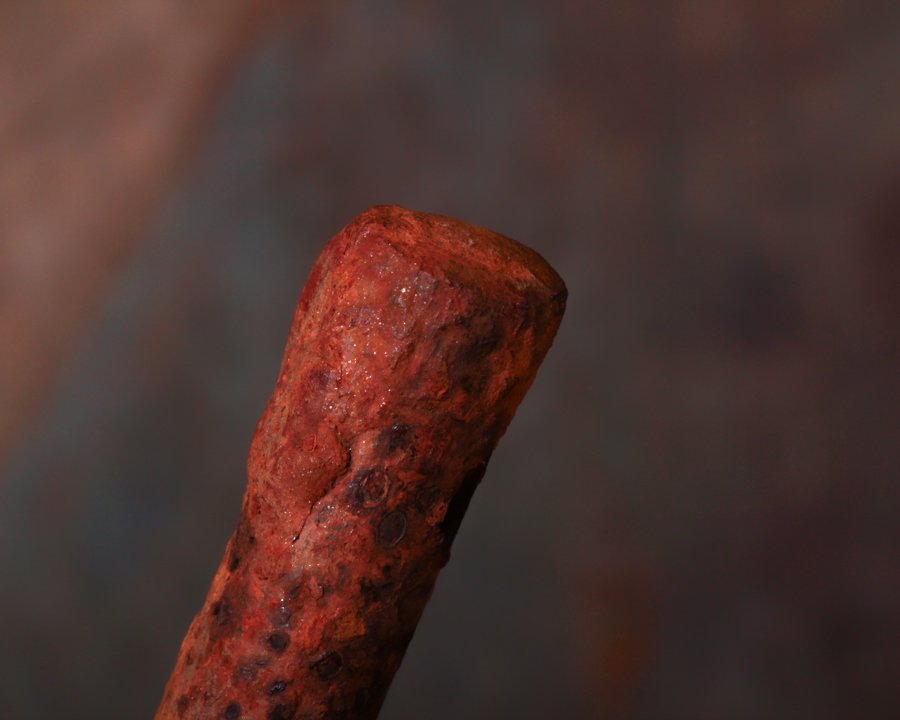
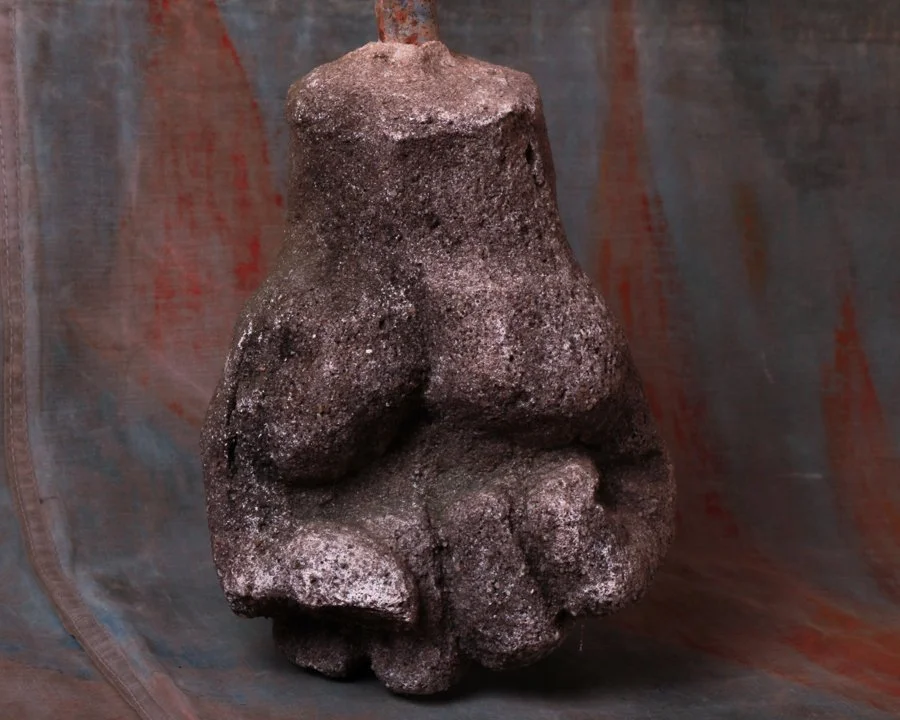
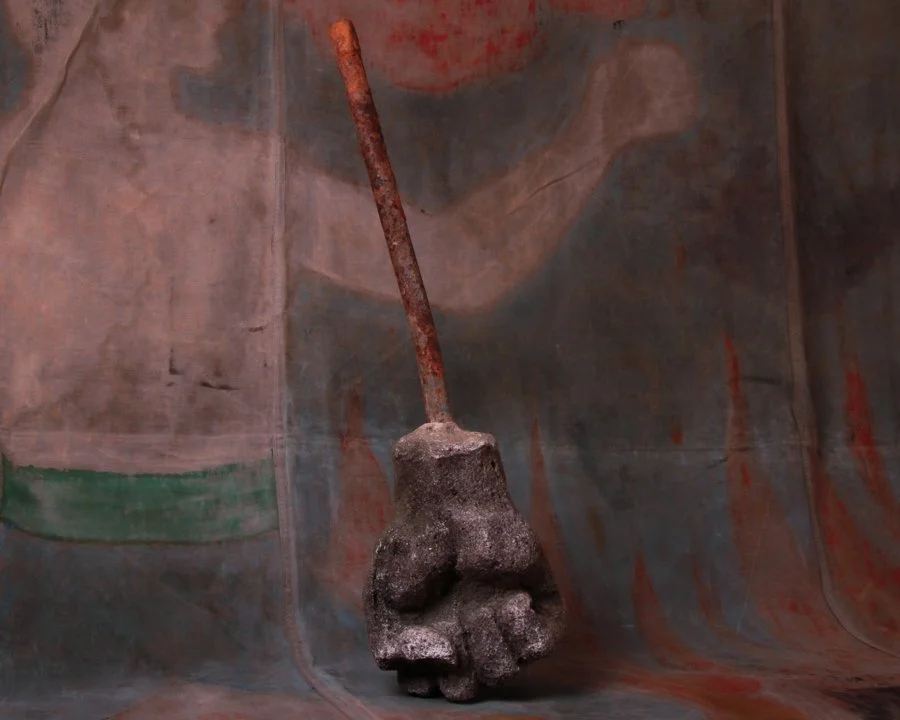
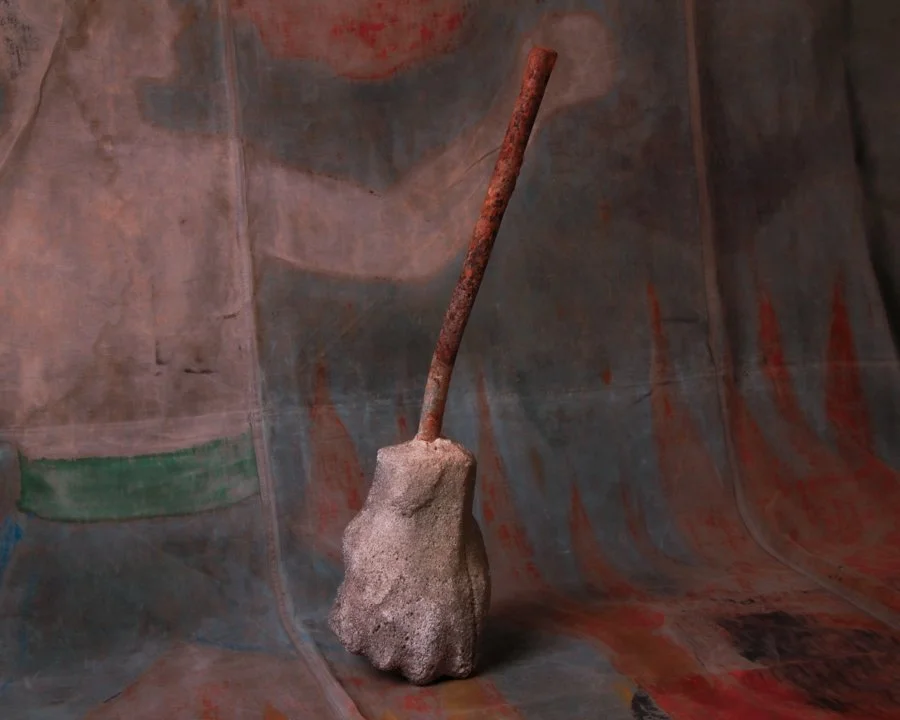
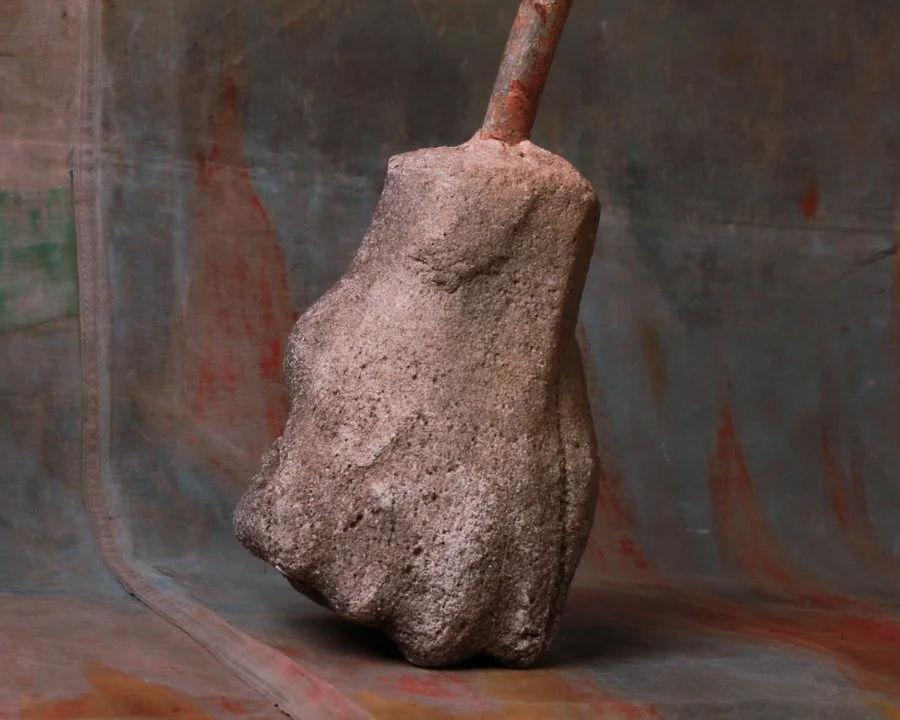
This carved stone fist is most likely a fragment from a larger statue, but it's got enough presence to stand alone (and maybe start a fight with the coffee table). It's a heavy, roughly hewn hand locked in a defiant clench, full of grit and texture. Mounted on a gnarly old steel rod with just the right amount of rust to make it look like it was salvaged from a post-apocalyptic monument.
The whole thing stands about 30" tall, with the stone itself measuring a burly 12" by 9".
Carved Stone Statues
Carved stone statues are the result of a slow conversation between material and maker. Unlike painting or casting, where you build something up, stone carving is about removal—taking away everything that isn’t the figure. It’s a subtractive process, which means there’s no easy undo. Every strike matters.
Historically, the process begins with selecting the right stone—marble, limestone, granite—each with its own density, grain, and temperament. Marble, for example, allows for fine detail and smooth surfaces, while harder stones demand more force and patience. The artist often starts with a rough block, sketching guidelines directly onto the surface or working from a model. Early stages are about mass—chisels and mallets knocking away large sections to establish form. As the figure emerges, tools become more refined: rasps, files, and abrasives smoothing edges, sharpening details, bringing out texture.
What’s interesting is how much planning goes into something that still feels improvisational. The artist has to think several steps ahead, visualizing the finished piece inside the block before it exists. At the same time, the stone pushes back—veins, cracks, and inconsistencies can alter the path, forcing adjustments mid-process.
The artists themselves range from anonymous craftsmen to highly trained sculptors, depending on time and place. In many traditions, carving was collaborative, with teams handling different stages. Others worked alone, shaping each detail by hand.
What remains is a record of that interaction. Tool marks, subtle variations, even small imperfections—they’re not flaws, but evidence of the process, frozen in a material that was always meant to last.
This carved stone fist is most likely a fragment from a larger statue, but it's got enough presence to stand alone (and maybe start a fight with the coffee table). It's a heavy, roughly hewn hand locked in a defiant clench, full of grit and texture. Mounted on a gnarly old steel rod with just the right amount of rust to make it look like it was salvaged from a post-apocalyptic monument.
The whole thing stands about 30" tall, with the stone itself measuring a burly 12" by 9".
Carved Stone Statues
Carved stone statues are the result of a slow conversation between material and maker. Unlike painting or casting, where you build something up, stone carving is about removal—taking away everything that isn’t the figure. It’s a subtractive process, which means there’s no easy undo. Every strike matters.
Historically, the process begins with selecting the right stone—marble, limestone, granite—each with its own density, grain, and temperament. Marble, for example, allows for fine detail and smooth surfaces, while harder stones demand more force and patience. The artist often starts with a rough block, sketching guidelines directly onto the surface or working from a model. Early stages are about mass—chisels and mallets knocking away large sections to establish form. As the figure emerges, tools become more refined: rasps, files, and abrasives smoothing edges, sharpening details, bringing out texture.
What’s interesting is how much planning goes into something that still feels improvisational. The artist has to think several steps ahead, visualizing the finished piece inside the block before it exists. At the same time, the stone pushes back—veins, cracks, and inconsistencies can alter the path, forcing adjustments mid-process.
The artists themselves range from anonymous craftsmen to highly trained sculptors, depending on time and place. In many traditions, carving was collaborative, with teams handling different stages. Others worked alone, shaping each detail by hand.
What remains is a record of that interaction. Tool marks, subtle variations, even small imperfections—they’re not flaws, but evidence of the process, frozen in a material that was always meant to last.