THIS OBJECT IS IN OUR EAST COAST INVENTORY, EMAIL US FOR SHIPPING ESTIMATE hello@heimweeantiques.com
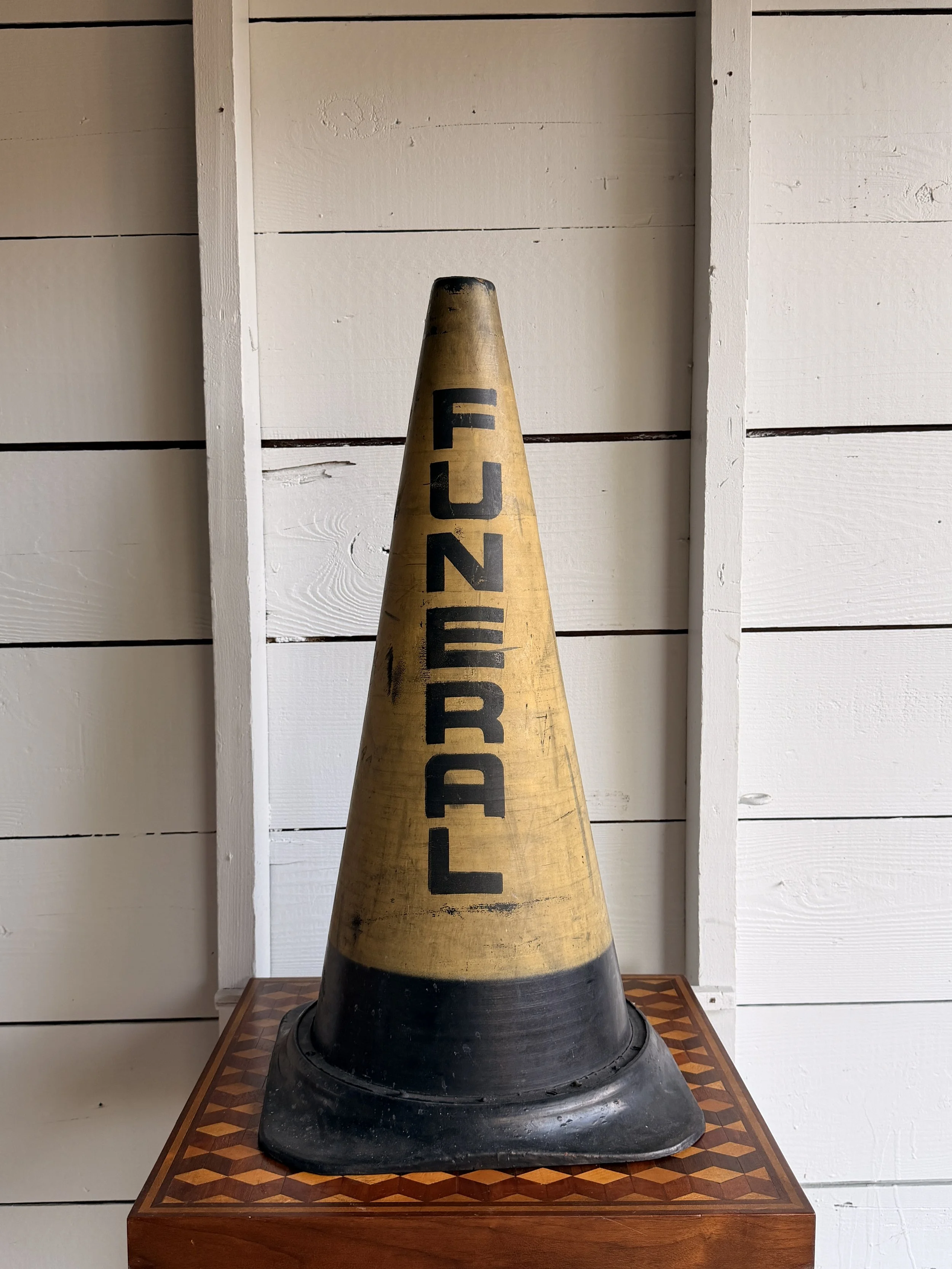
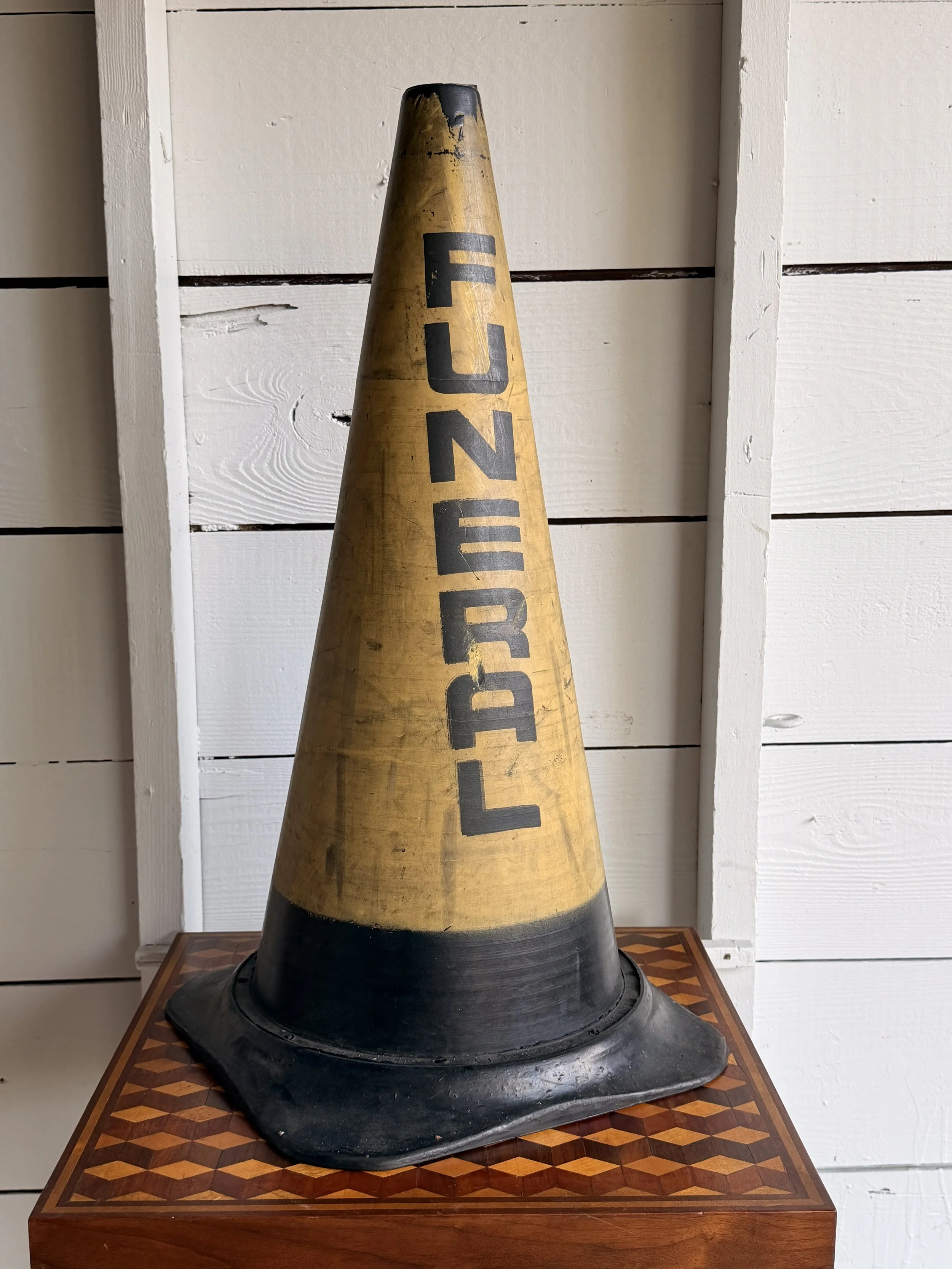
An unusual vintage funeral cone, featuring a mustard-yellow body with bold black lettering running vertically down its tapered surface. The cone sits on a substantial black base designed to keep it upright and stable when placed along a roadside or curb. Years of practical use have left behind scratches, scuffs, and areas of surface wear, giving it a particularly nice patina. There's something rather appealing about its straightforward typography and utilitarian design, especially considering its somewhat somber purpose.
Funeral cones were used by funeral homes, undertakers, and cemetery attendants to reserve parking spaces, organize funeral processions, and keep entrances clear for hearses and other vehicles carrying mourners.
As horse-drawn funeral carriages gradually gave way to motorized hearses during the early 20th century, managing the arrival and departure of funeral parties became increasingly important, particularly in busy urban areas.
The modern traffic cone traces its origins to the early 1940s, when Charles D. Scanlon, a street department painter in Los Angeles, began experimenting with flexible road markers made from discarded automobile tires. His design was patented in 1943, and by 1947, molded rubber cones had entered commercial production. Their portability, durability, and stackable construction made them particularly useful across a variety of industries.
Funeral establishments adopted specially marked cones as a practical alternative to temporary wooden signs and barriers. Their distinctive lettering communicated the nature of the parking restriction while maintaining a degree of discretion appropriate to the occasion.
While contemporary funeral cones are generally manufactured from synthetic materials, often incorporating reflective surfaces for improved visibility, older examples belong to an interesting category of occupational signage.
Alongside undertakers' trade signs, hearse accessories, mourning ephemera, and other mortuary furnishings, these everyday objects offer an interesting glimpse into the practical side of the funeral industry, an aspect of its history that is often overlooked by collectors.