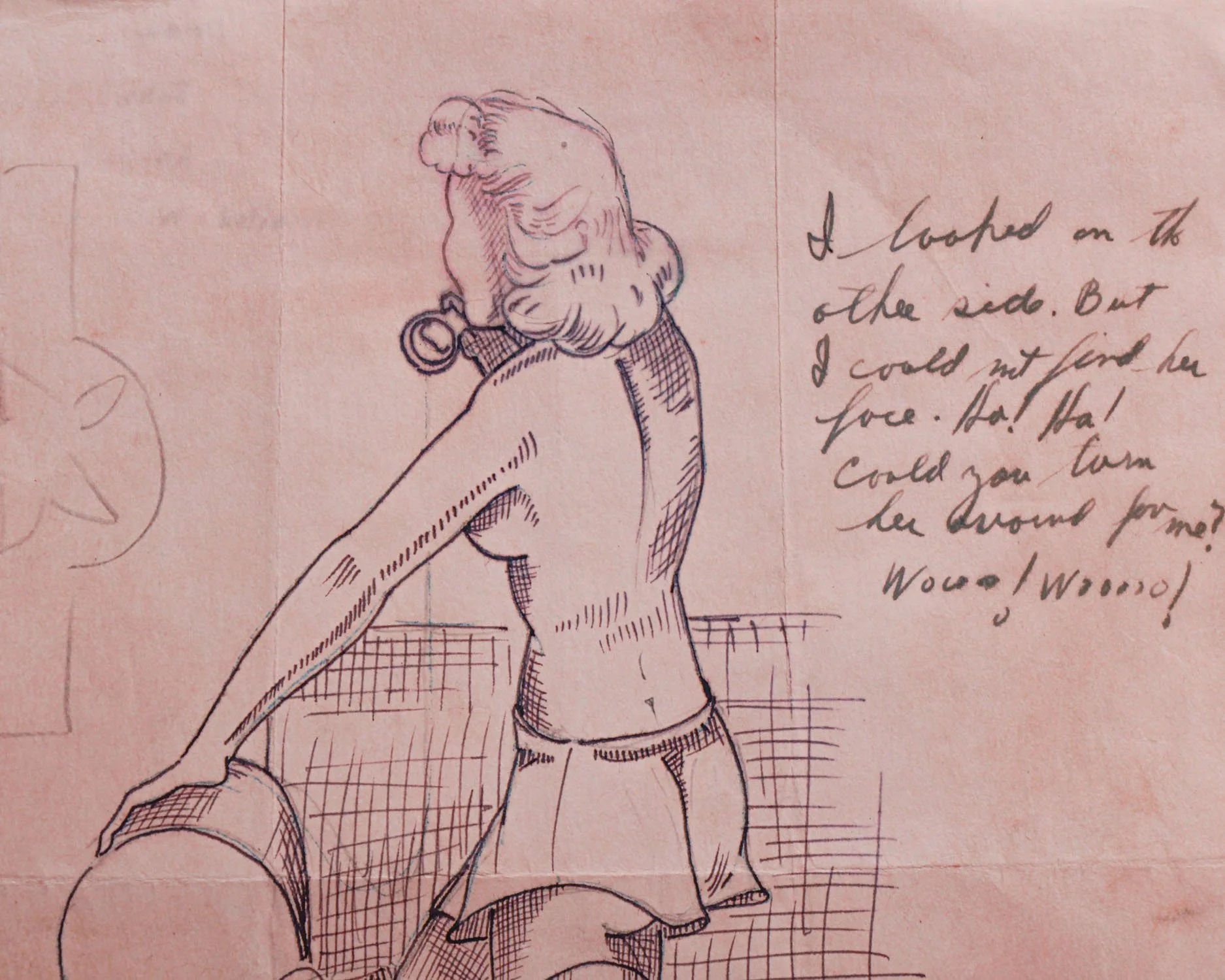
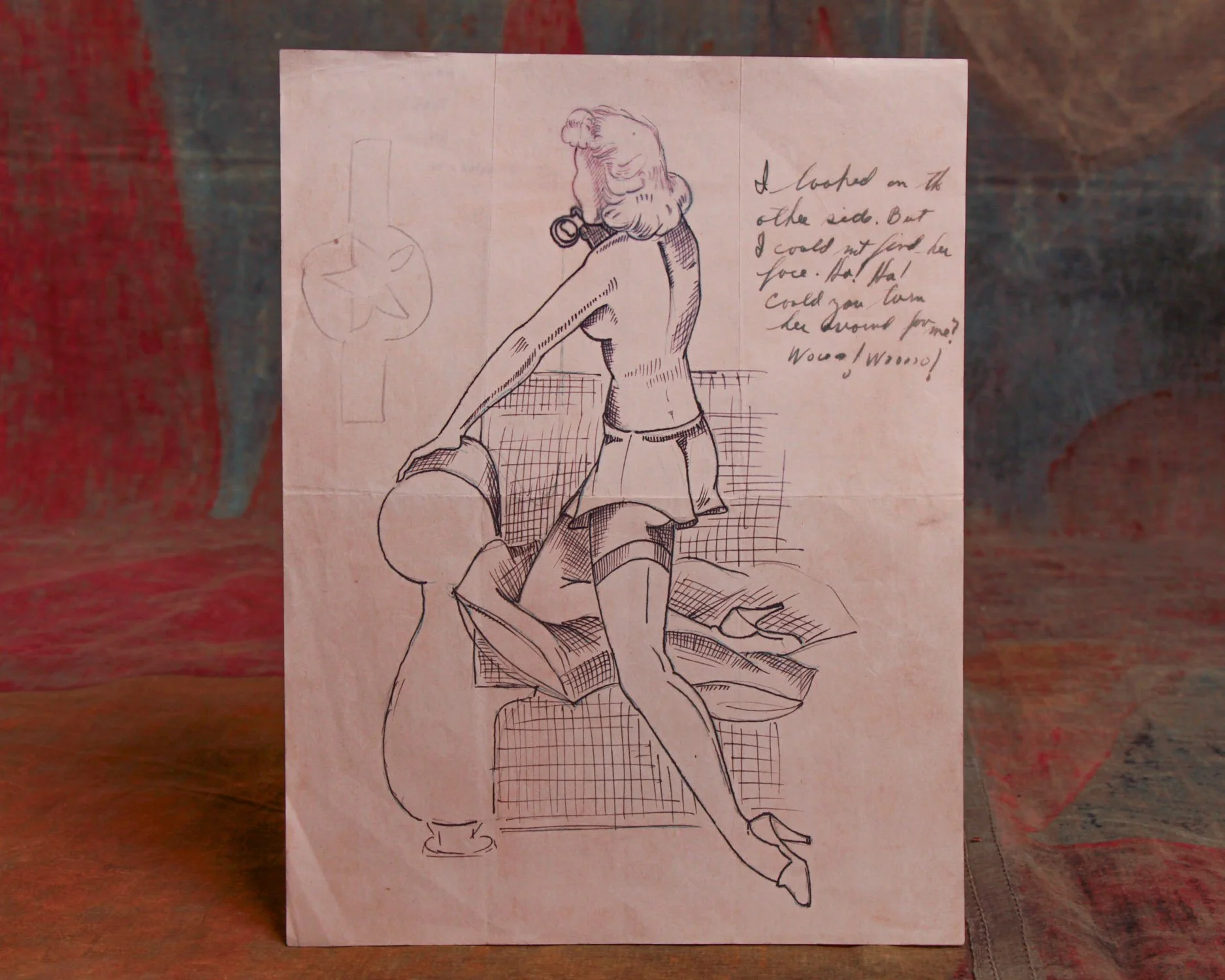
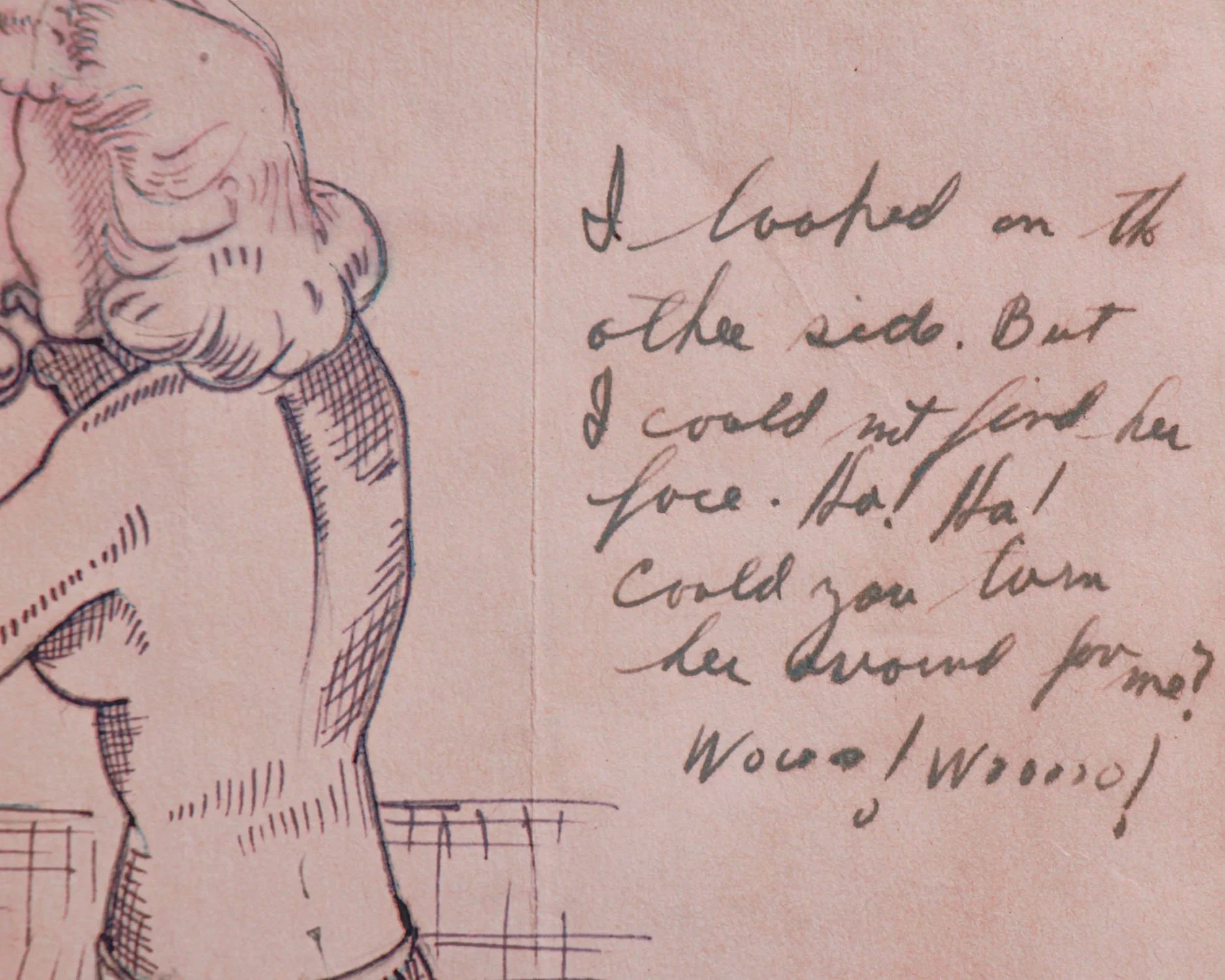
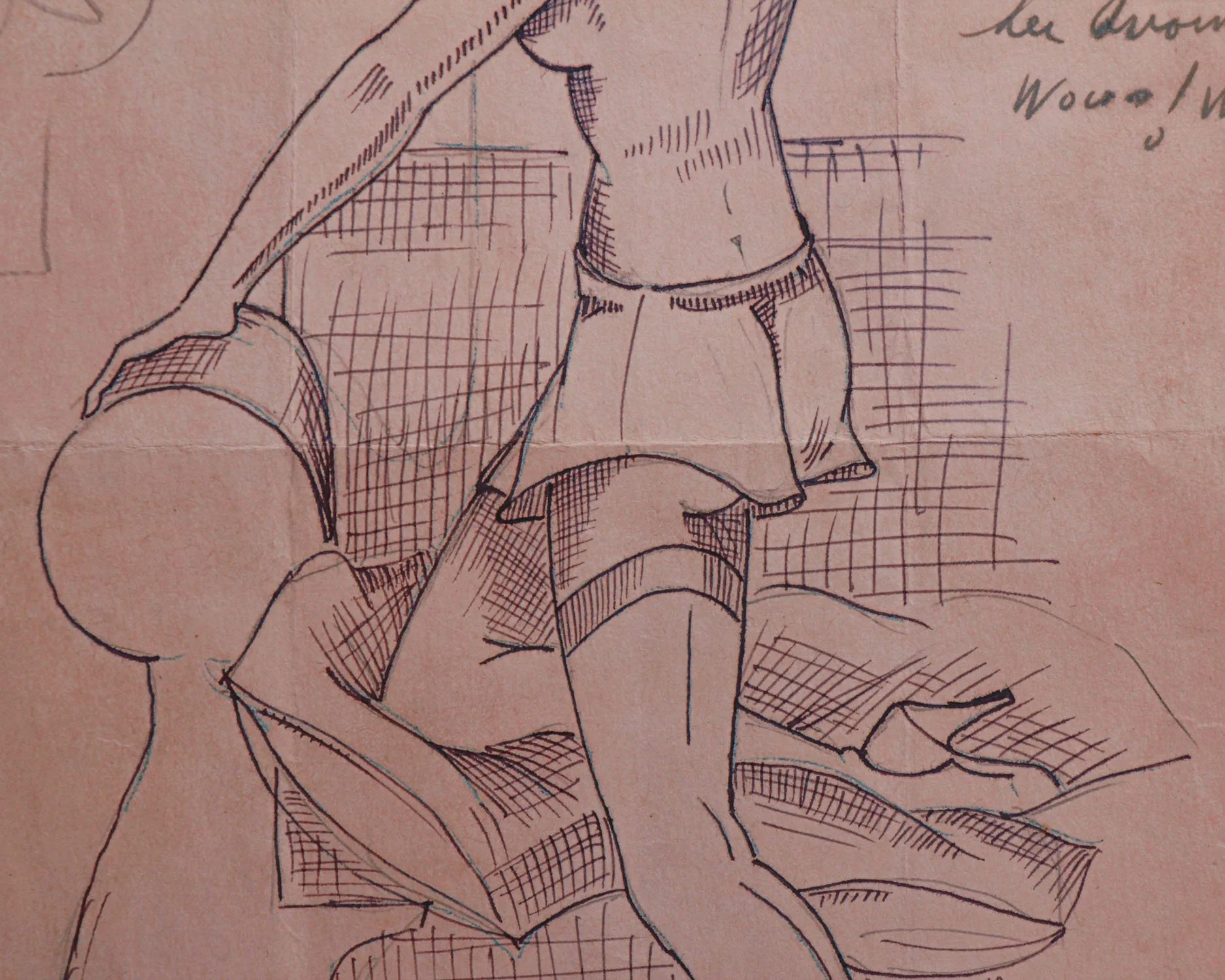
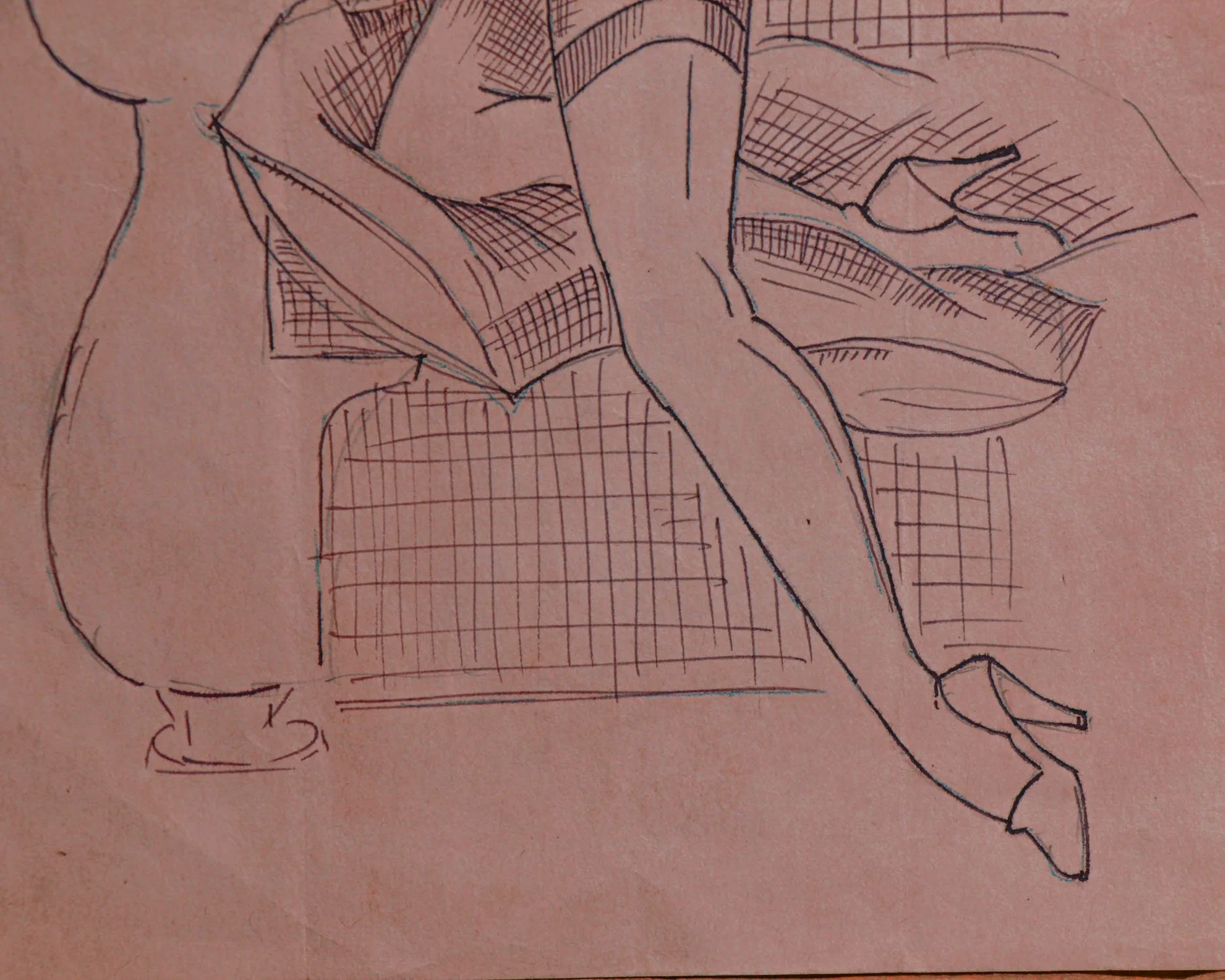
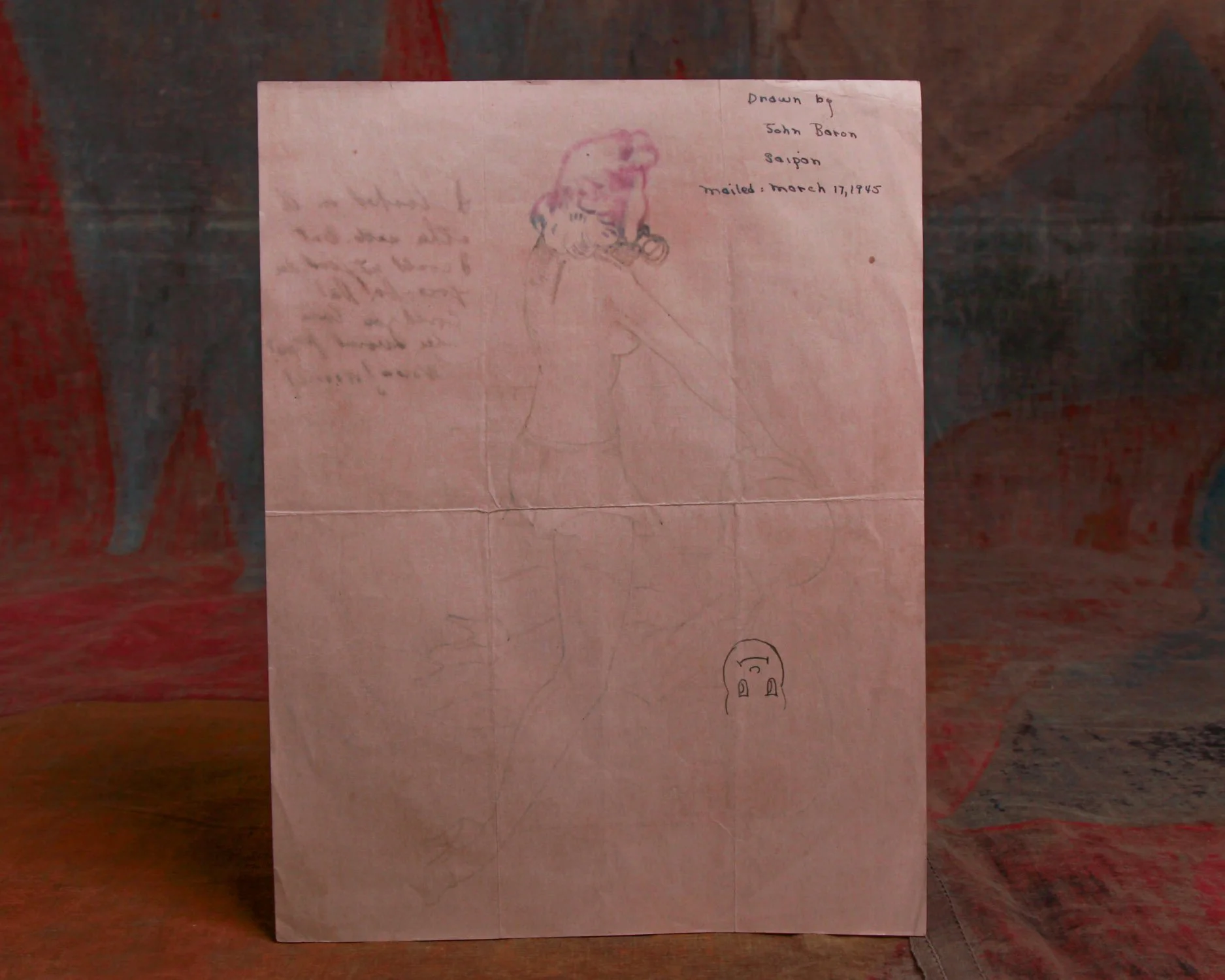
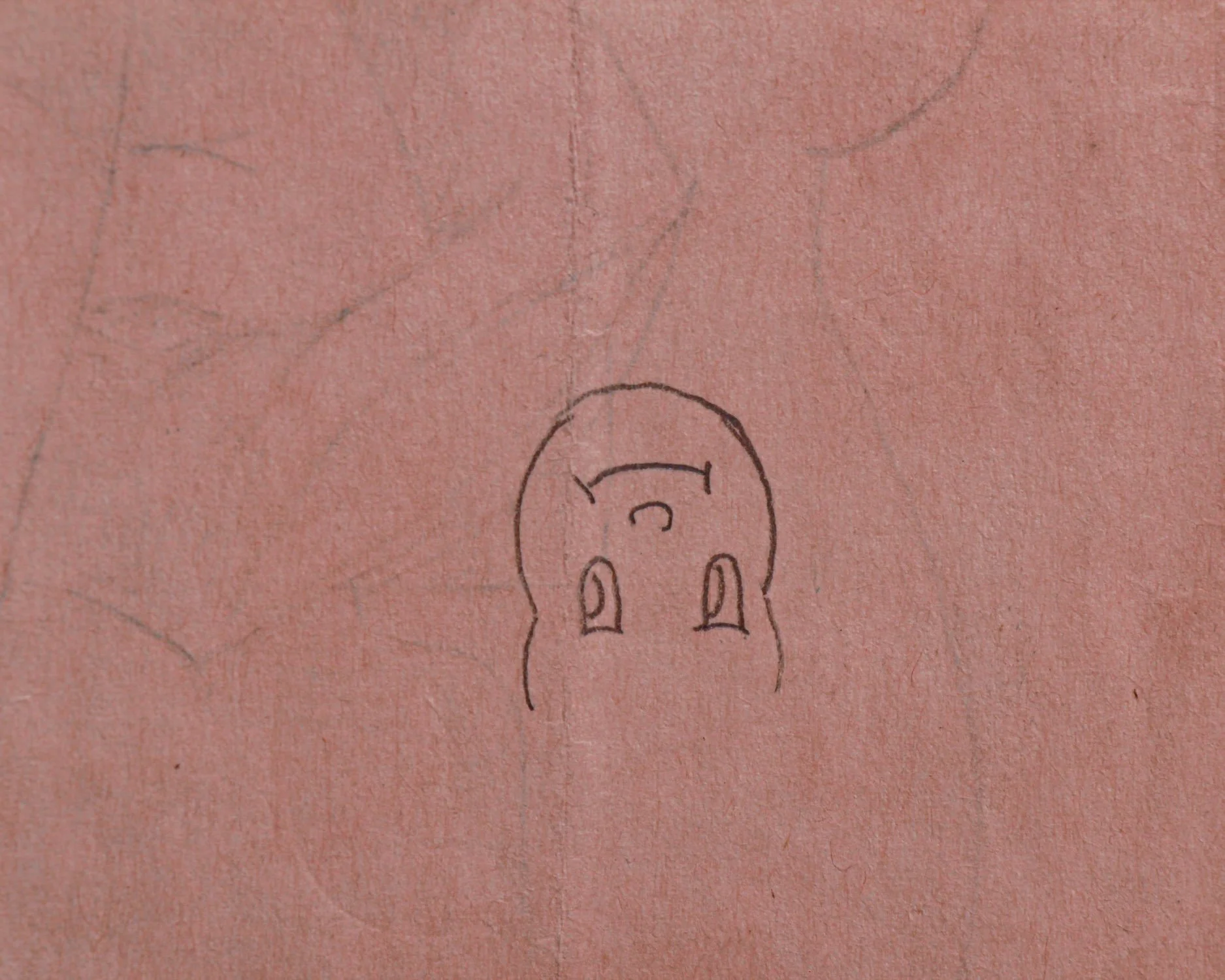
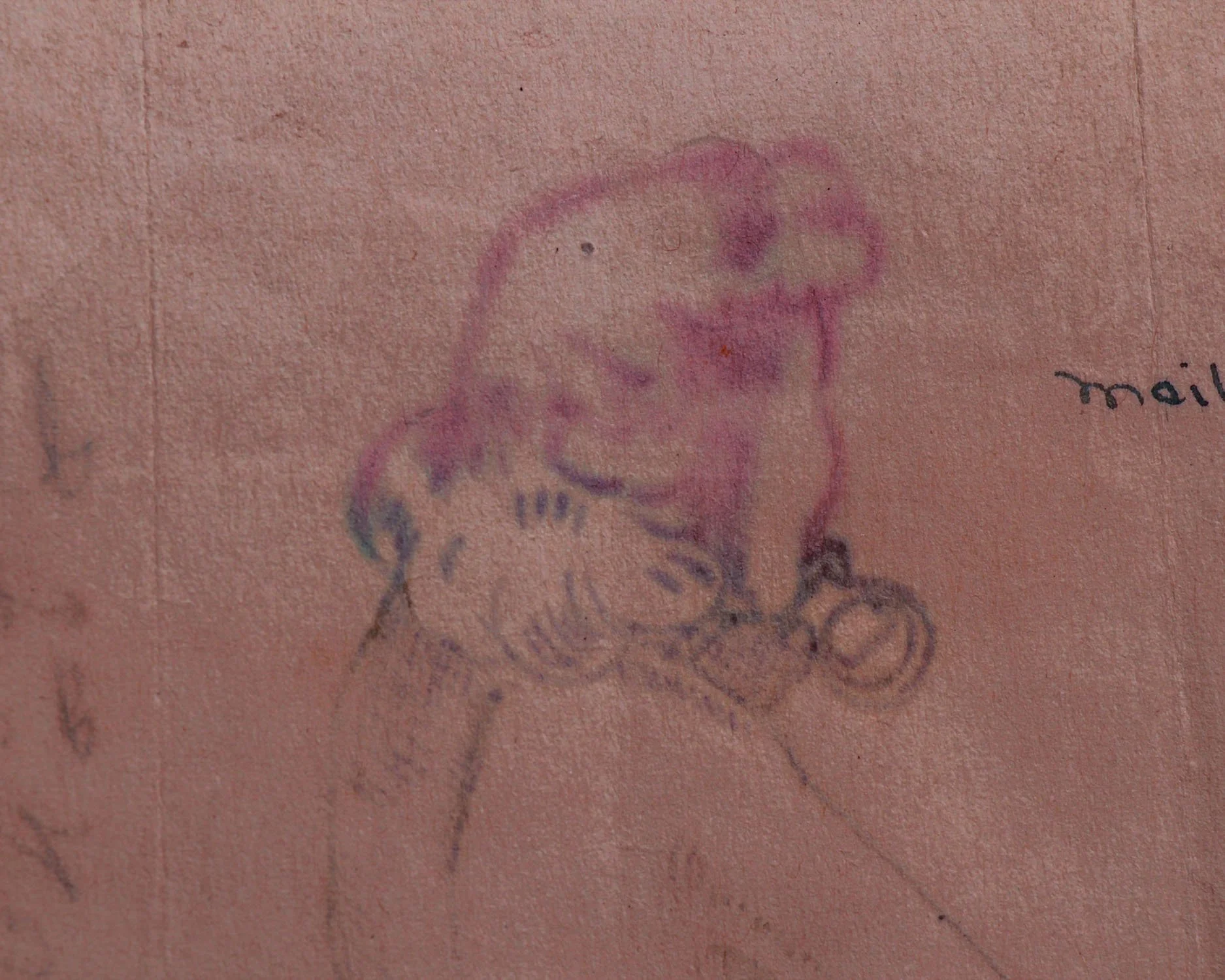
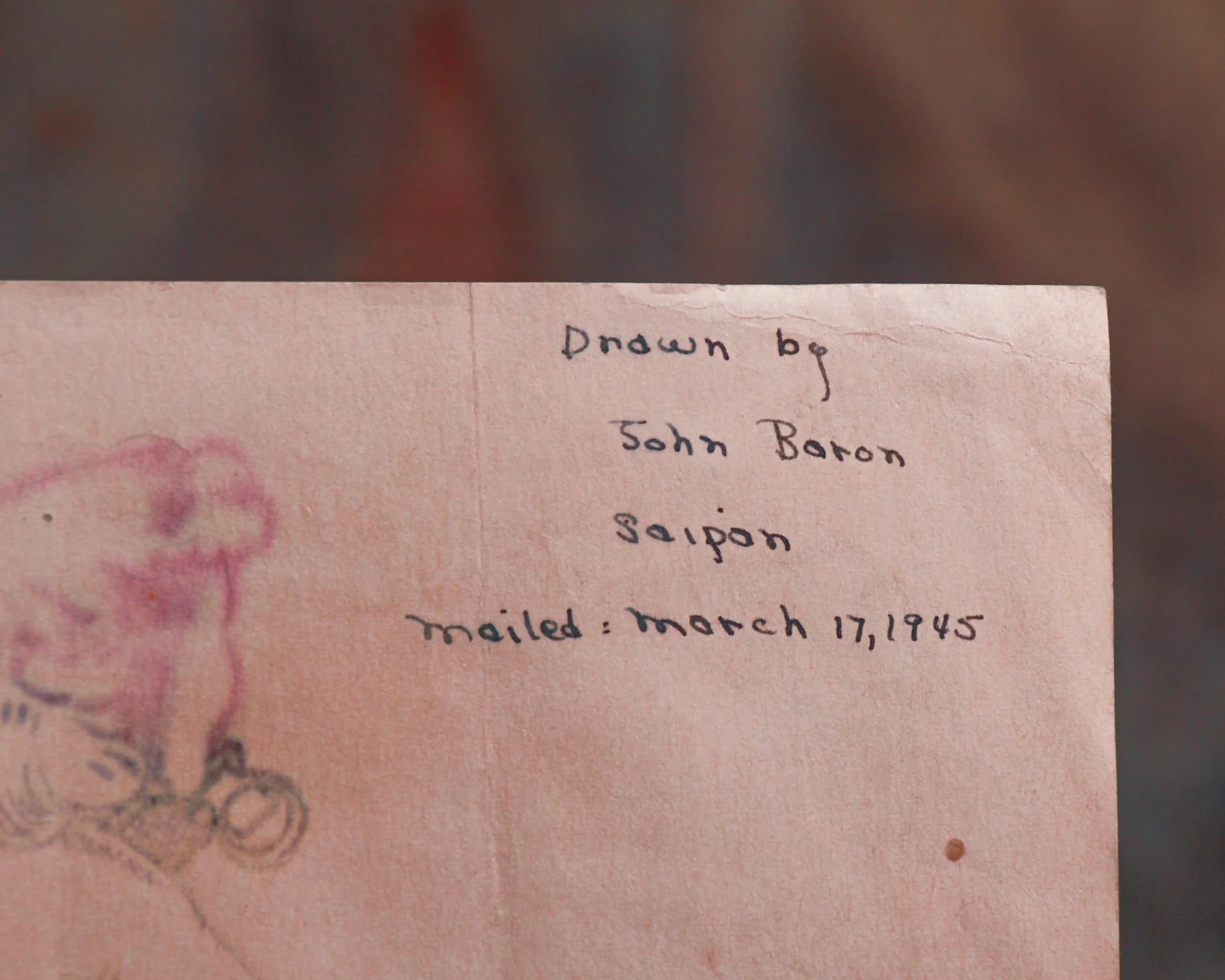
Original World War II-era pinup sketch drawn in ink on paper, depicting a young woman seated sideways on a cushioned sofa, wearing a short skirt, stockings, high heels, and a top hat. She holds a large ball or rounded cushion while looking over her shoulder. The drawing uses confident outlines and crosshatching to create depth and shading, with a humorous handwritten message alongside the figure. On the reverse, an inscription identifies the artist as John Baron, notes Saipan as the location, and records a mailing date of March 17, 1945. The paper shows fold lines, discoloration, and general wear, with additional pencil sketches and markings on the back.
Pinup art became an important part of American popular culture during World War II, particularly among servicemen stationed overseas. Illustrations of glamorous women appeared in magazines, calendars, postcards, and military publications, offering entertainment and a reminder of home.
Artists such as Alberto Vargas and George Petty helped establish the familiar pinup style, combining fashionable clothing, playful poses, and lighthearted humor. Their illustrations circulated widely among troops, appearing in barracks, lockers, and personal correspondence.
Alongside commercially printed images, servicemen frequently created their own drawings, cartoons, and humorous sketches. These could be exchanged between friends, mailed home, or included in letters to family members and sweethearts.
Saipan, captured by American forces in July 1944, became an important military base in the Pacific. Its airfields supported B-29 bombing operations against Japan, while thousands of American servicemen were stationed on the island.
Mail was an important connection between troops overseas and the United States, with letters often carrying personal drawings, jokes, and observations about daily life.
Such handmade artwork offers a more personal perspective on wartime culture, documenting the creativity and humor of ordinary servicemen beyond official military photographs and publications.