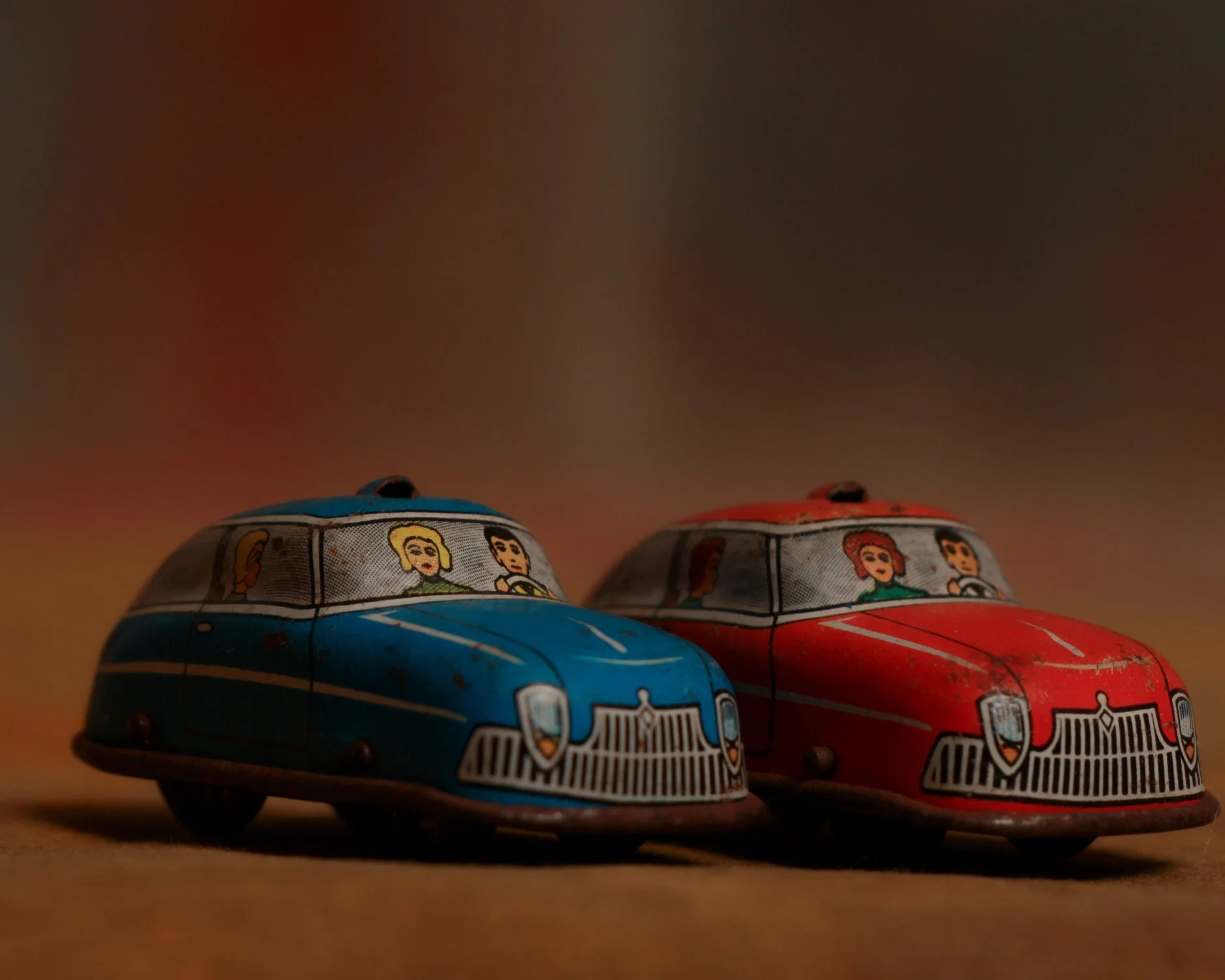
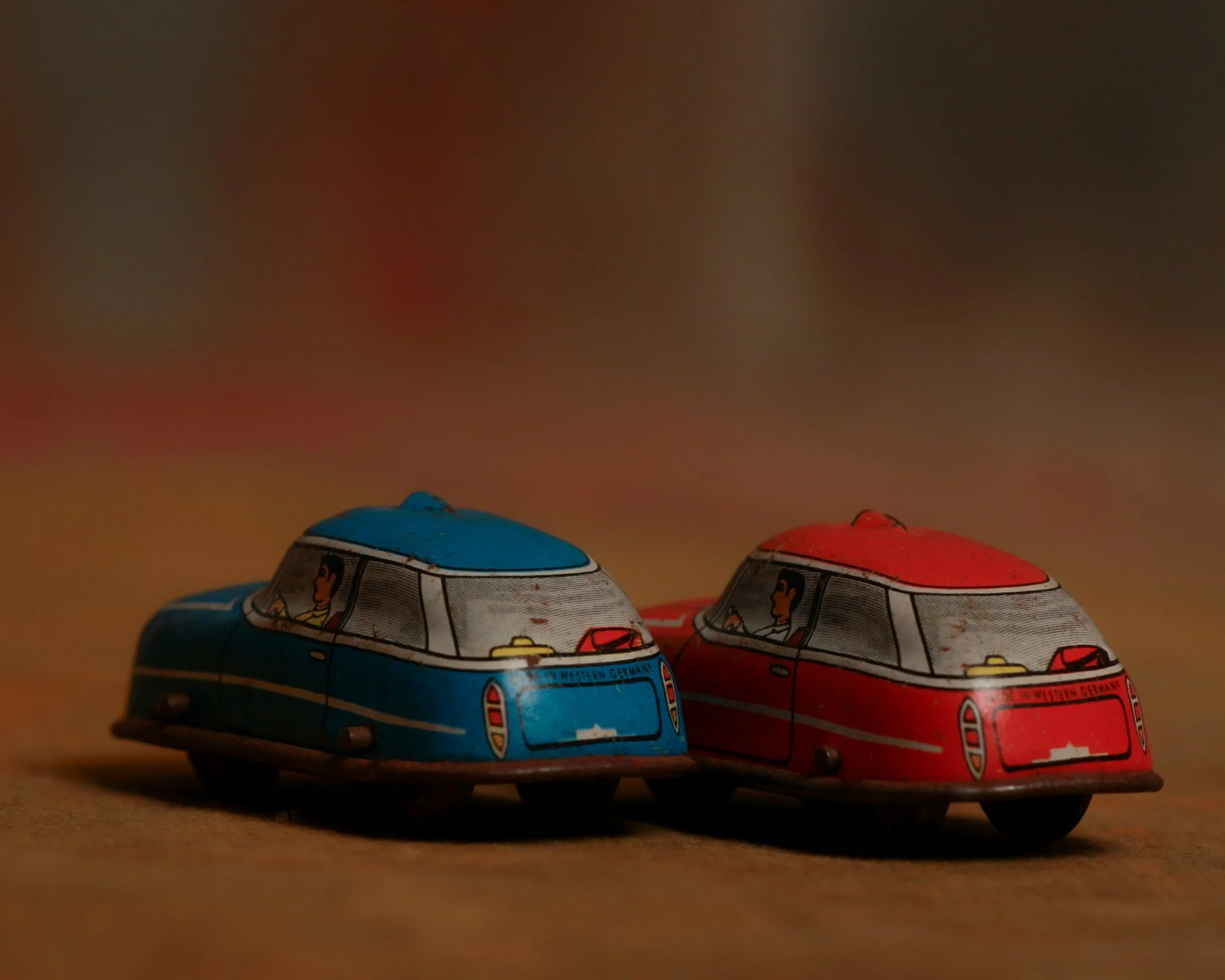
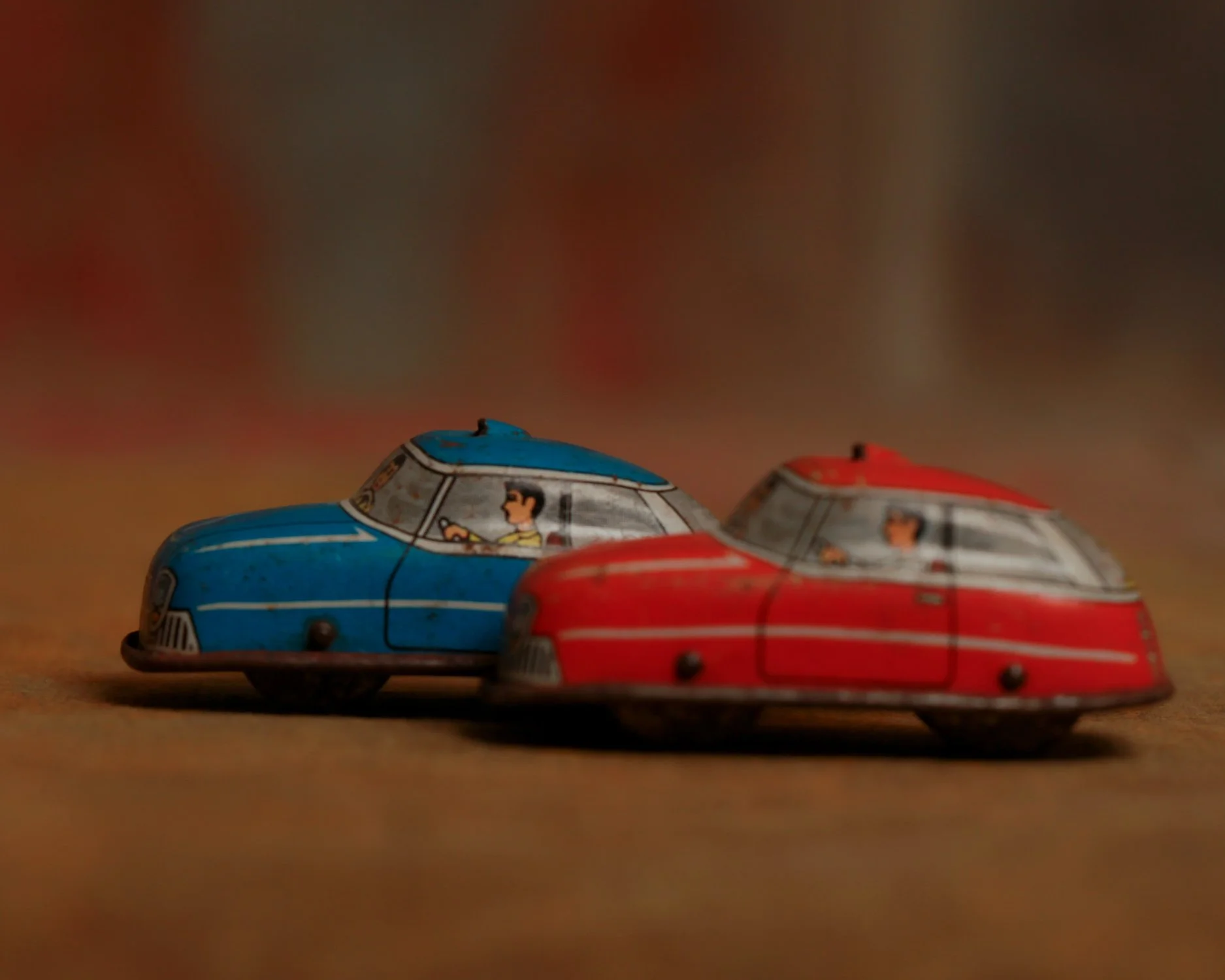
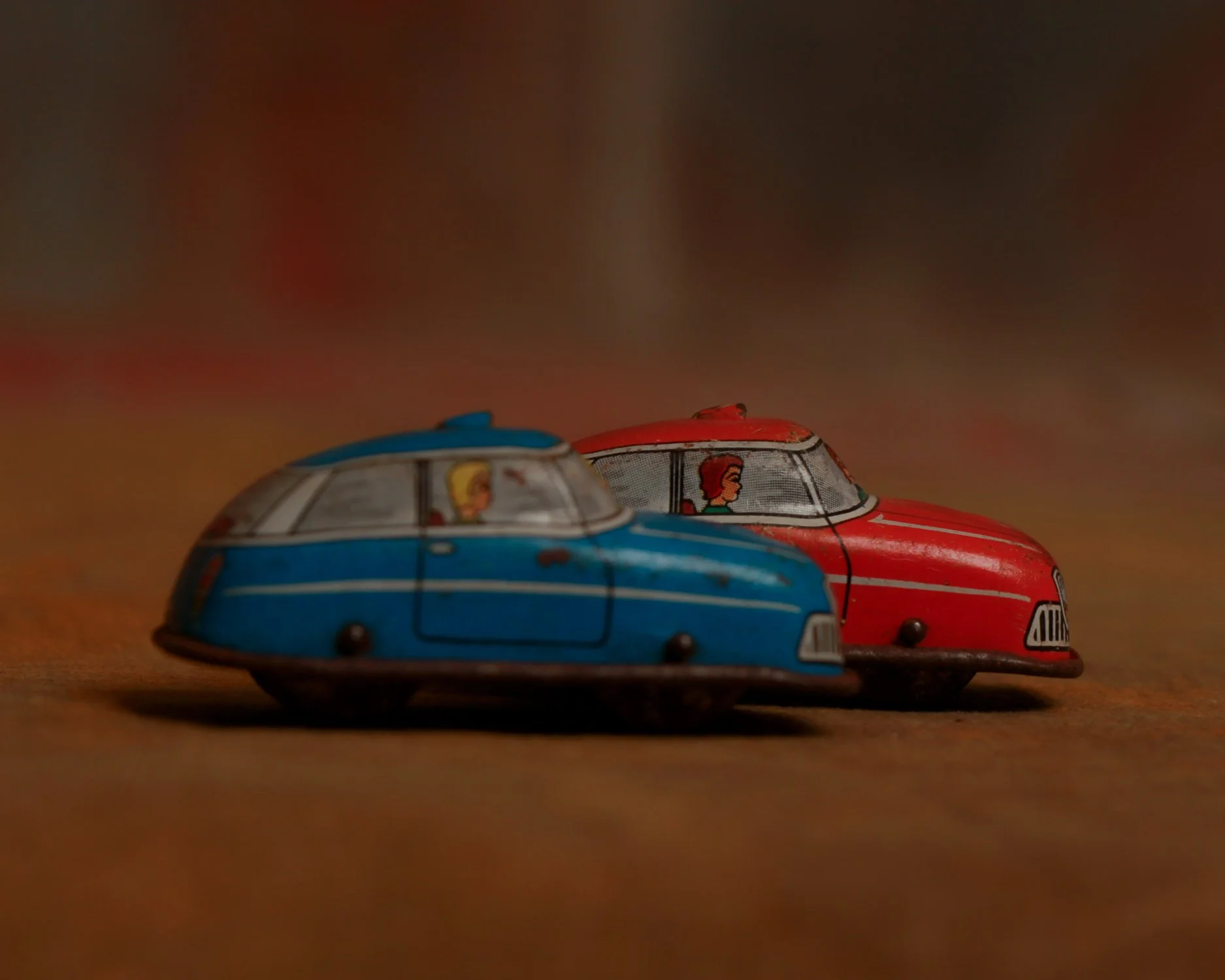
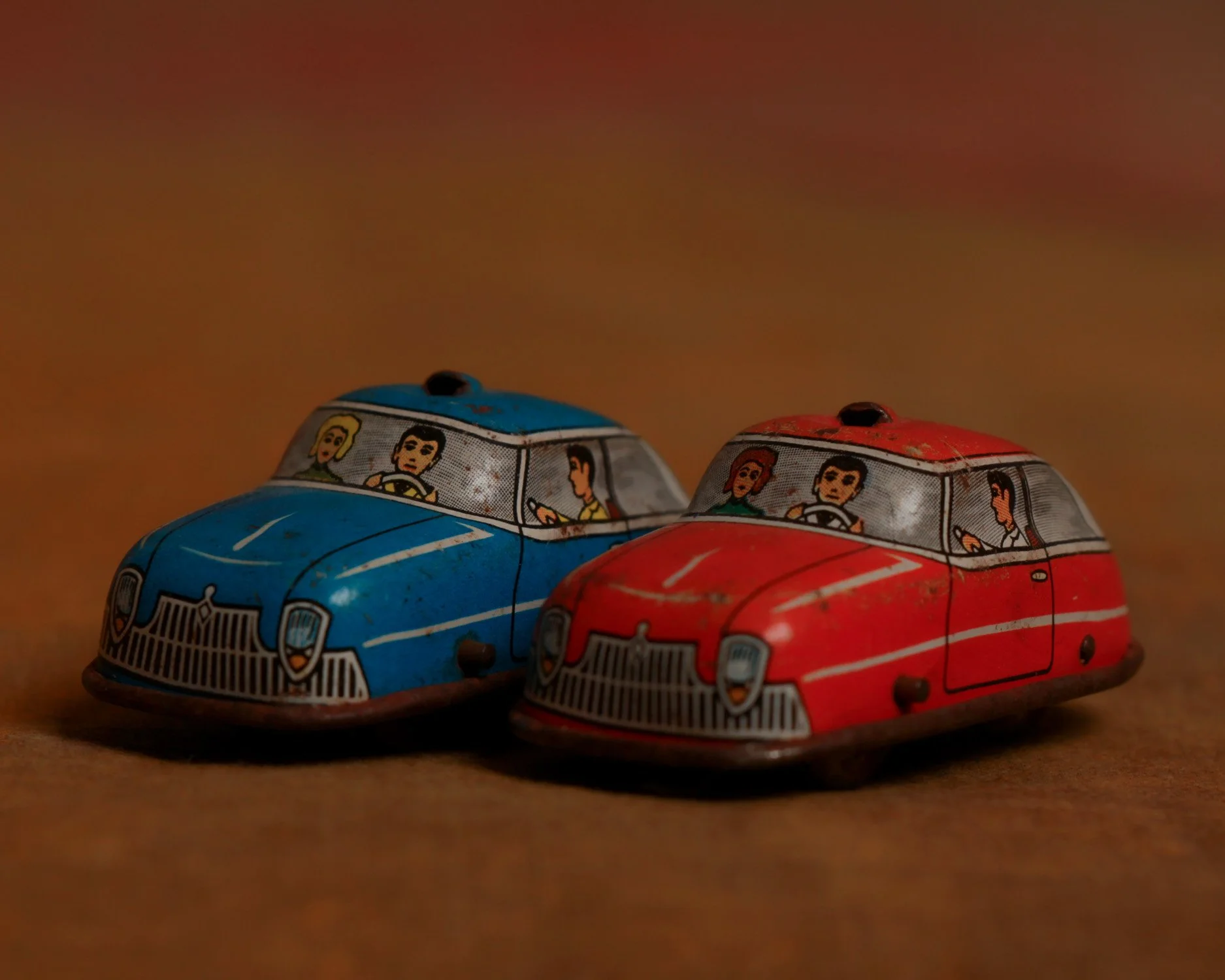
Pair of miniature tin lithographed toy cars from the 1950s, originally part of the Technofix Game Lift Garage playset made in Western Germany. One finished in bright blue and the other in red, both feature streamlined bodies, printed grilles, headlights, doors, and windows, with illustrated passengers inside. The colorful lithography gives the little cars plenty of character, with drivers and passengers visible through the windshields and side windows. Each has small wheels underneath and a metal loop on the roof, originally associated with the garage's lifting mechanism. Both show scratches, small spots of oxidation, and general wear consistent with age and play.
Technofix was a German toy brand produced by Gebrüder Einfalt, a Nuremberg-based manufacturer known for its colorful lithographed tin toys. Founded in the early 1920s, the company became particularly successful with mechanical toys, including cars, motorcycles, garages, racetracks, and elaborate roadway playsets.
Following World War II, Western Germany experienced a revival in toy manufacturing, with Nuremberg once again becoming an important center of production. German manufacturers exported large quantities of toys to the United States and other international markets throughout the 1950s.
Technofix specialized in mechanical playsets that combined printed tinplate landscapes with moving vehicles. These often featured winding roads, ramps, elevators, bridges, and clever mechanical systems that allowed miniature cars to travel through carefully designed environments.
The Game Lift Garage was part of this tradition, incorporating a garage structure and a lifting mechanism that added another dimension to children's play.
Tin lithography was especially popular during this period because manufacturers could print detailed illustrations directly onto sheets of metal before cutting, shaping, and assembling them into toys.
By the 1960s, plastic increasingly replaced tinplate in toy manufacturing, gradually bringing an end to the elaborate lithographed mechanical toys that had defined much of the industry's earlier production.