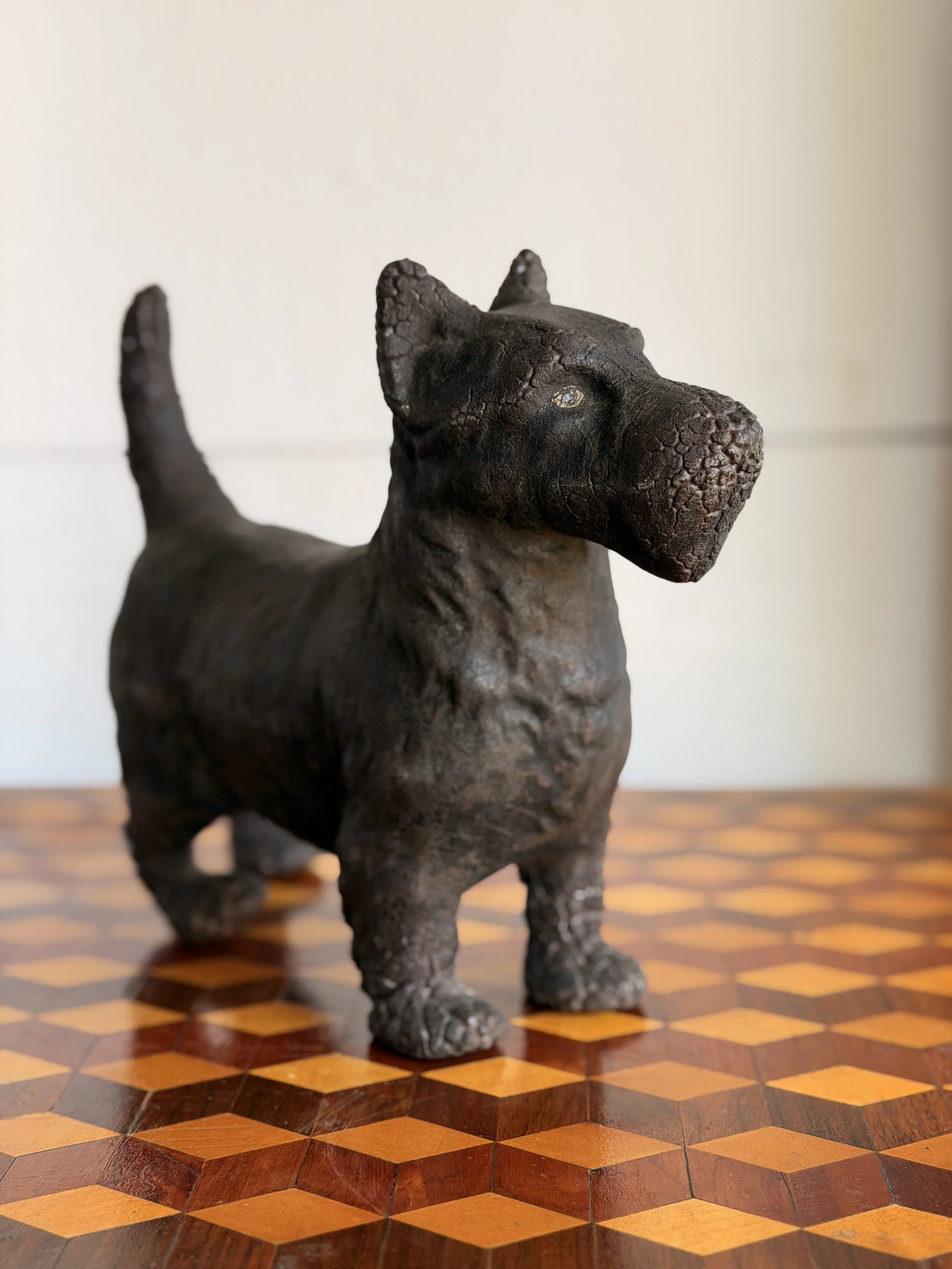
Antique solid rubber doorstop in the shape of a Scottish Terrier, or Scottie dog. With its pointed ears, oversized muzzle, short legs, and upright tail, the figure captures the breed's familiar appearance. Molded in a standing position, it has a substantial, compact body with a dark brown, nearly black finish. The surface shows extensive crackling and wear, particularly around the face, paws, and ears, with traces of painted details remaining in the eyes. The textured coat and exaggerated facial features give it plenty of personality. Likely dating to the early to mid-20th century, it was made to hold doors open while doubling as a decorative household accessory.
Animal-shaped doorstops became especially popular in American homes during the late 19th and early 20th centuries. Earlier examples were typically made from cast iron, often painted by hand and produced in a wide variety of designs, including dogs, cats, rabbits, birds, and farm animals.
As rubber manufacturing expanded during the early 20th century, manufacturers began using molded rubber for an increasing range of household goods. Rubber offered several practical advantages over metal, including its ability to grip floors, resist slipping, and avoid scratching furniture or woodwork.
Scottish Terriers became particularly fashionable during the 1920s and 1930s, appearing in everything from toys and advertising to bookends, figurines, and household accessories. Their distinctive silhouette made them especially well suited to decorative objects.
The breed's popularity received an additional boost when President Franklin D. Roosevelt's Scottish Terrier, Fala, became a familiar public figure during the 1940s.
By the middle of the century, manufacturers were experimenting with different rubber compounds and synthetic materials for everyday products. Animal doorstops remained popular, combining a practical household function with the widespread affection for dogs and other familiar creatures.