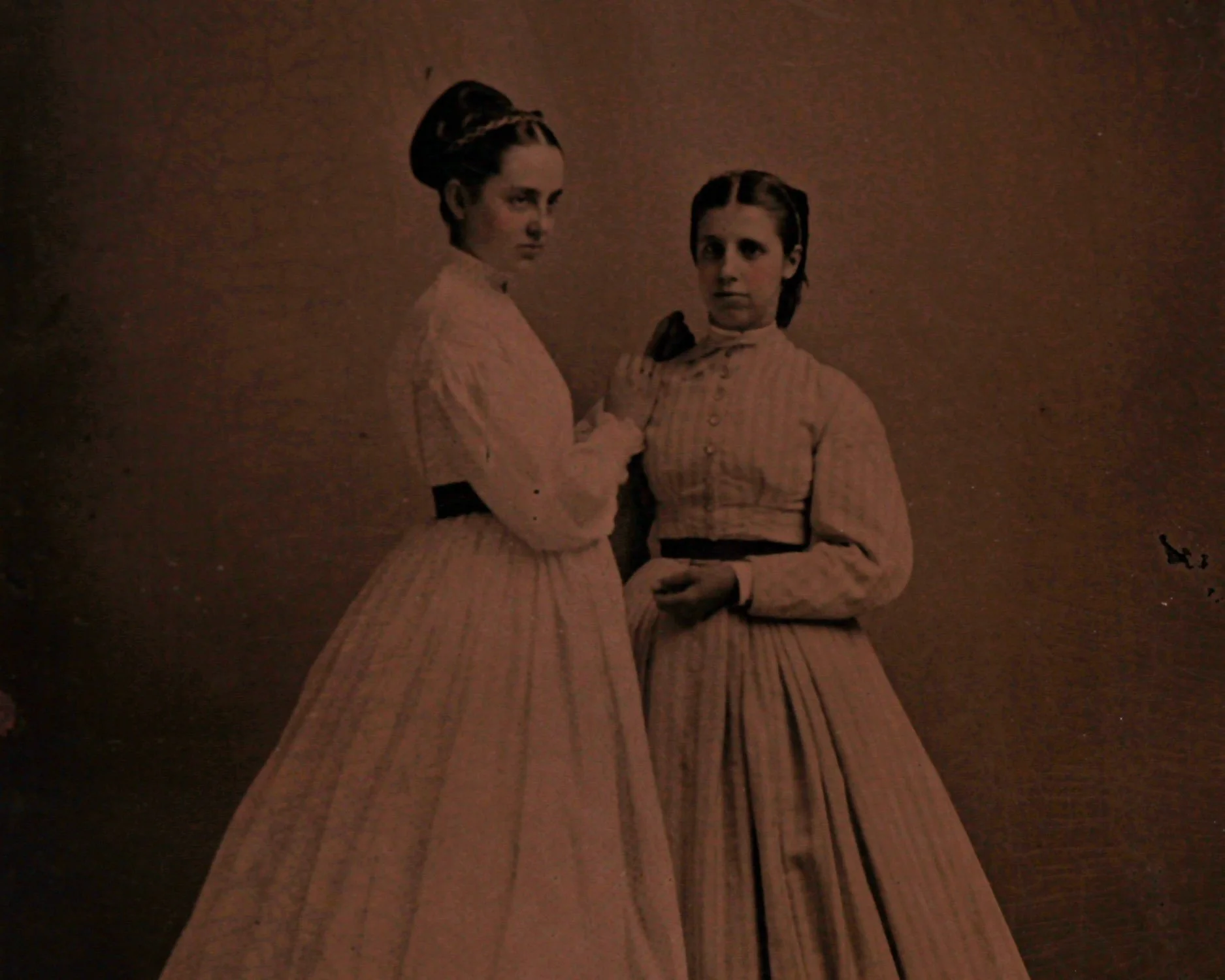
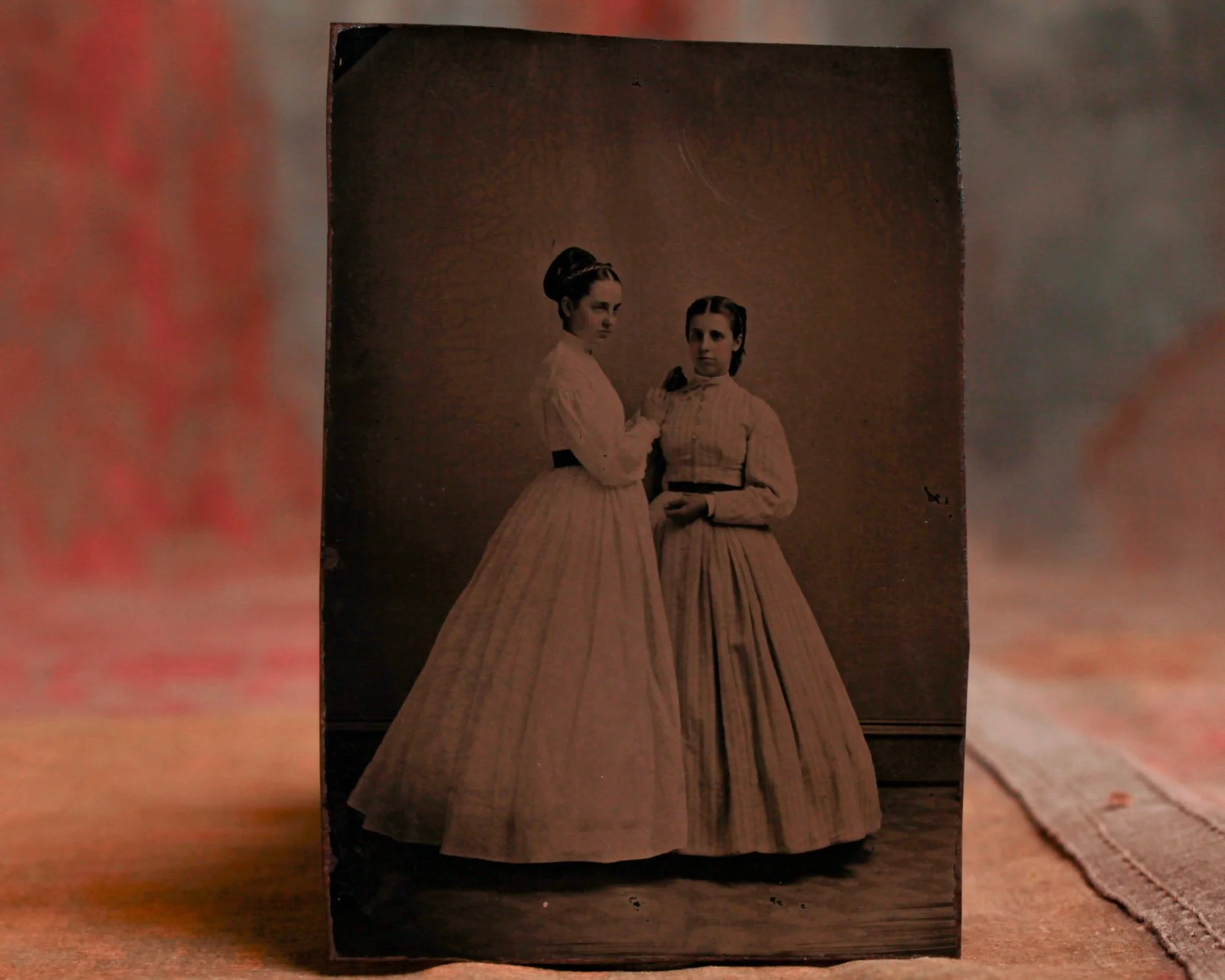
19th-century tintype photograph depicting two young women standing together in a photographer's studio, dressed in nearly matching light-colored gowns. Both wear long, full skirts with fitted bodices, high collars, and long sleeves, accented by dark belts at the waist. The woman on the left has her hair arranged in an elaborate updo, while the woman on the right wears hers parted in the middle and pulled back. One rests her hand gently on the other's shoulder, creating an intimate, carefully composed portrait. Likely dating to the 1860s, the photograph has a warm, dark tone and shows minor surface marks and wear along the edges.
Tintype photography, also known as ferrotype, was introduced in the mid-1850s and quickly became one of the most affordable and accessible photographic processes of the 19th century. Despite the name, tintypes were not made from tin but from thin sheets of iron coated with a dark lacquer.
The photographic image was produced directly on the metal surface using the wet plate collodion process, creating a unique positive image that could be viewed without additional printing.
Unlike daguerreotypes and ambrotypes, tintypes were inexpensive, relatively durable, and did not require protective glass cases. Photographers could produce them quickly, making them especially popular at fairs, carnivals, traveling studios, and military camps.
During the American Civil War, tintypes became particularly widespread as soldiers and their families exchanged inexpensive portraits before long separations.
Studio portraits frequently featured carefully arranged poses, decorative furniture, painted backdrops, and fashionable clothing. Because exposure times could still require subjects to remain motionless, expressions were often serious and restrained.
By the 1870s and 1880s, improvements in photographic technology made portrait photography increasingly available to ordinary Americans.
Tintypes remained in use into the early 20th century, particularly among itinerant photographers and amusement photographers, long after newer photographic processes had become widespread.